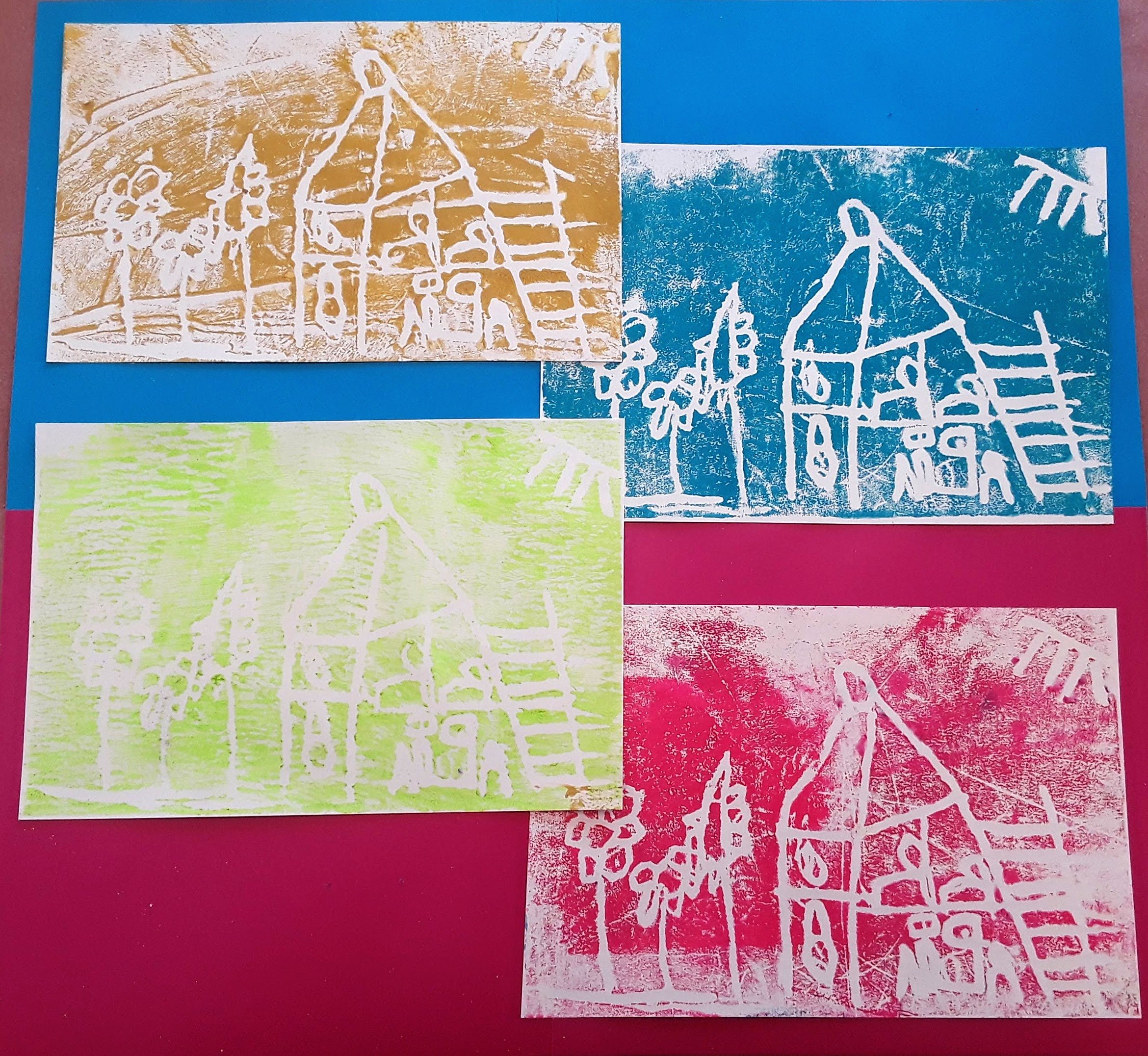
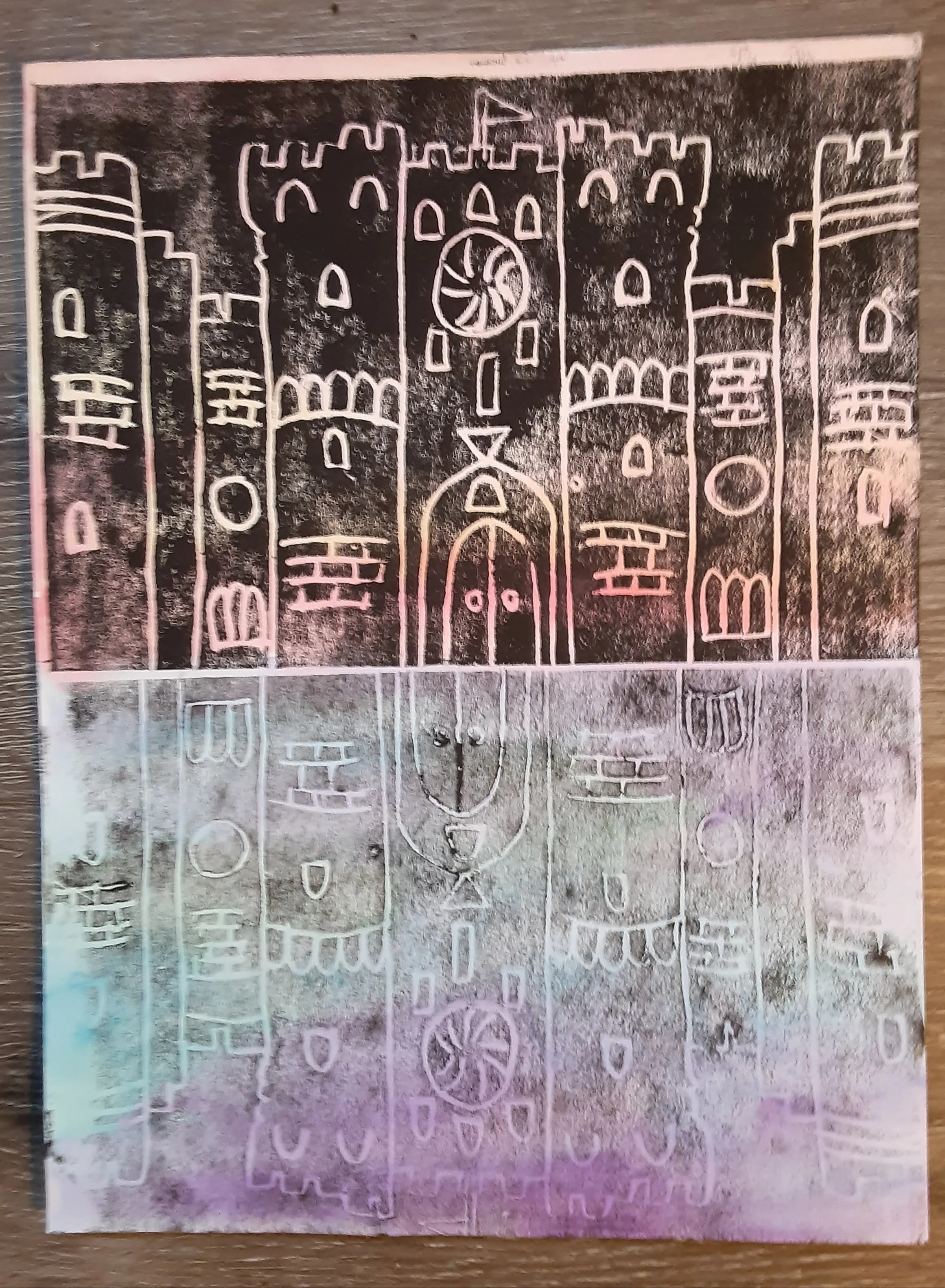
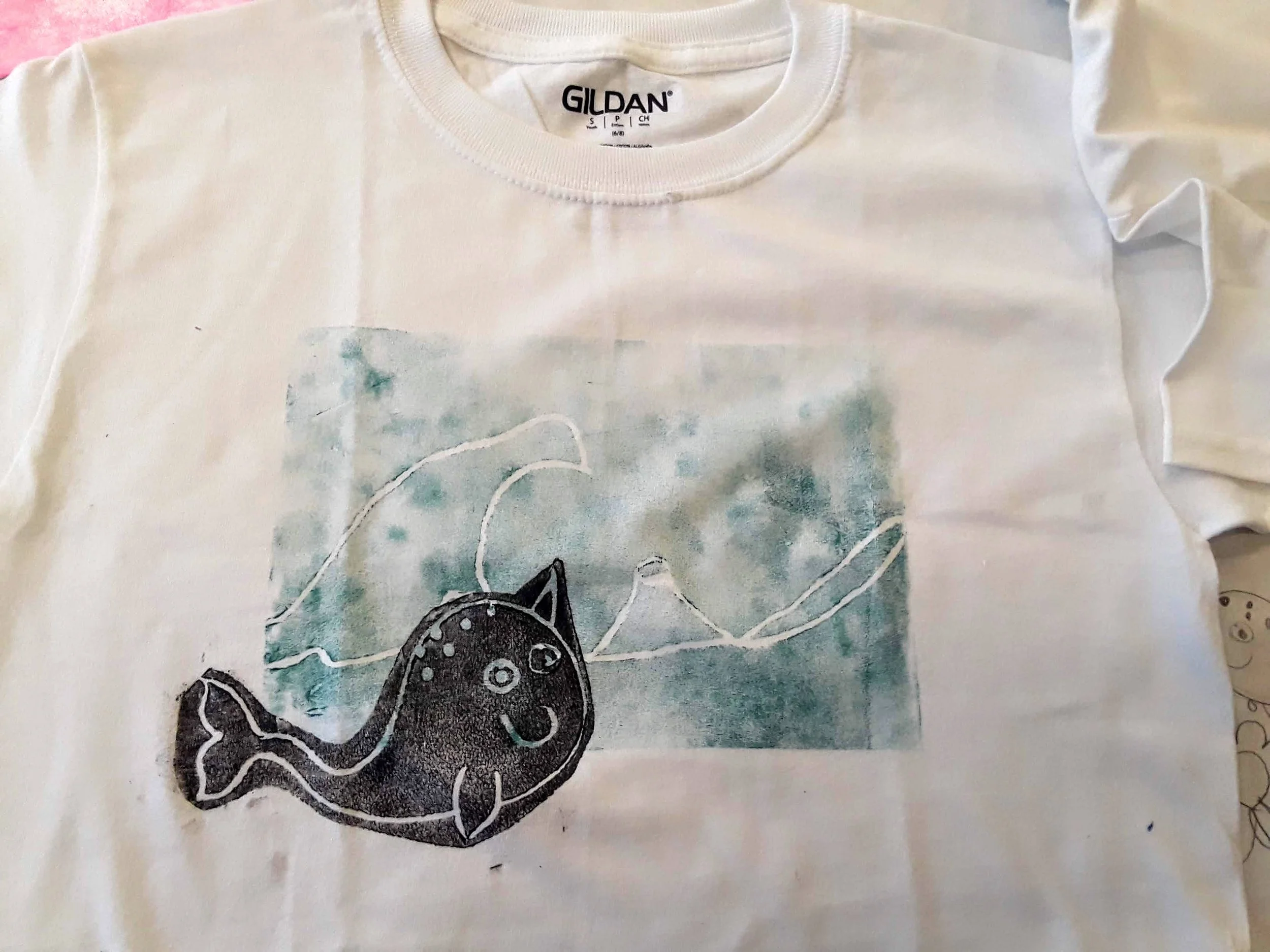
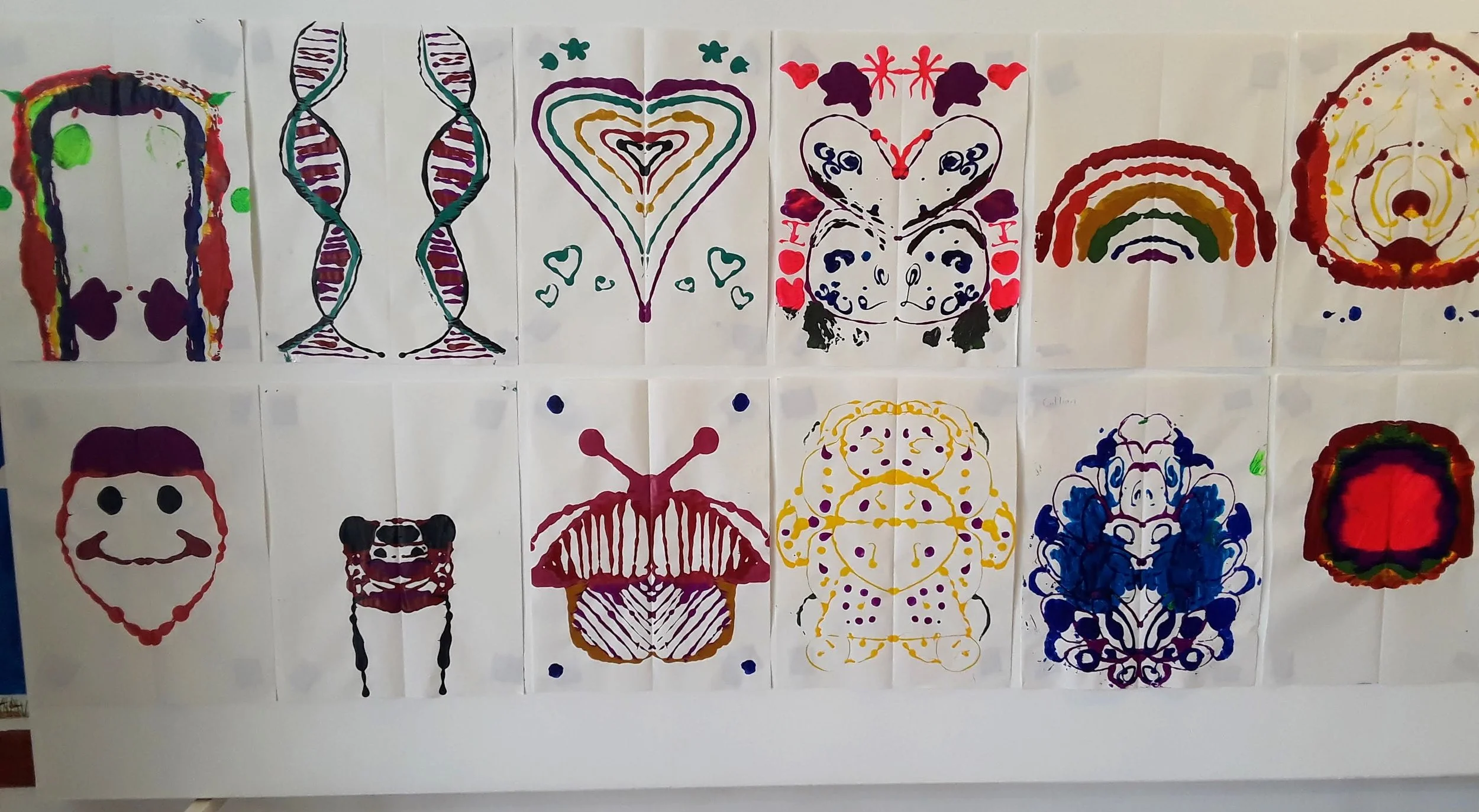
Printmaking is one of the most fascinating yet often overlooked mediums in the visual arts. Unlike drawing or painting, it carries an exciting sense of unpredictability—an element of surprise that makes the process both engaging and rewarding. Each print reveals something slightly unexpected, which is part of what makes learning the many techniques of printmaking so enjoyable. While professional printmakers and collegiate artists may work with advanced tools and processes, this medium can still be introduced to children in approachable and meaningful ways. In my experience teaching, young students are especially drawn to the anticipation of discovering the final image, finding just as much excitement in the reveal as I do in my own artistic practice.
Printmaking is the process of transferring an image from one surface, or matrix, onto another, most commonly paper or fabric. There are many ways to adapt printmaking for younger learners while still preserving the essence of the medium. Instead of carving into wood or metal, children can create designs using softer materials such as rubber, foam, or styrofoam. Techniques like monoprinting allow students to experiment with color, texture, and layering while producing one-of-a-kind images. Folded paper prints, paint applications, and simple pressing methods encourage creativity and curiosity, making each result feel like a surprise waiting to unfold.